
Interview with Students of Y2MAC
For many parents, "smartphone addiction" was not a concern during their own school years. However, today’s children are known as "digital natives." Their mastery of technology far exceeds imagination, yet this often leaves them trapped in the black hole of digital addiction. This is not merely a domestic struggle but a global challenge. In August 2025, Finland enacted a ban on smartphone use in primary and secondary schools . Today, over 58% of countries have a similar ban. Furthermore, Bill Ready, CEO of the social media giant Pinterest, wrote in TIME magazine urging governments to implement a comprehensive ban on social media for adolescents under 16. He stated bluntly that the current digital environment is an "uncontrolled global social experiment" on children, noting that most platforms are designed to maximize watch time rather than protect user well-being. As digital tools increasingly permeate adolescent life, constructing the right mindset for their use has become the most pressing and difficult task for modern parents.

(Photo from https://www.pexels.com/zh-tw/photo/8457972/)
Founded in 2022, the Y2 Montessori School - Adolescent Community (Y2MAC) chooses to face this challenge by "returning to reality." From the start of the school year, strict regulations on smartphone usage are implemented. Jan, the principal of the school, analyzes this from a developmental perspective: adolescents undergo intense hormonal shifts. , making them highly susceptible to insomnia or anxiety caused by digital addiction.
In addition, their brains are changing rapidly and are largely governed by the reward pathway, making them susceptible to anything that will give them a shot of dopamine. This is why they take so many risks as teenagers, and it is what helps them gain the experiences they need to mature into adulthood. Unfortunately, this system is prone to being hijacked during adolescence, the time when many addictions start, as adolescents look for ways to manage the intense emotions of this period of their lives. The gaming, social media, and video apps that students use on their smartphones are designed to hijack the brain's reward system, keep them scrolling, and easily and quickly lead to addiction.
She suggests that before the age of 16, priority should be given to strengthening "authentic human interaction." This insistence on the age of 16 as a threshold aligns perfectly with the insights of international tech leaders. Through face-to-face communication, eye contact, and reading body language, students build relationships uninterrupted by digital tools. Before reaching physical and mental maturity, rich interpersonal exploration is far more vital than a virtual life. This is the key to Y2MAC’s mission: returning education to the essence of living by guiding adolescents to rediscover internal order and self-agency as well as build adult-style relationships, empathy, and the ability to resolve conflicts and work with people of all kinds through authentic, physical connections.
Days of Insomnia Without a Phone
Wendy and Jasper, now in the high school department, once struggled with heavy smartphone use. They candidly shared those days when "life without a phone meant anxiety," hoping their experiences as "seniors" could serve as a guide for younger students.
Before entering a Montessori middle school, Wendy jokes that she was a child "raised by a smartphone." Because her parents were busy with work, she remembers starting to use phones around first or second grade—from idiom puzzles and Candy Crush to eventually chatting on social media and watching videos. It wasn't until she entered Y2MAC in seventh grade, where phone use was restricted, that she realized the depth of her dependence, which had even manifested as anxiety and insomnia.
Jan, who is also a guide at Y2MAC, noticed Wendy’s distress. Collaborating with Wendy’s parents, they agreed that the phone would be handed over to her parents at 9:30 PM every night when she returns home for the weekend and in the holidays. Considering her needs, Jan eventually decided on a more thorough support plan—assisting in keeping the phone for an entire month. Behind this seemingly strict adjustment period lay Jan’s deeper intent: she wanted to help Wendy break the brain’s habitual dependence on digital stimulation through temporary distance. The process was not easy. Reflecting on her state at the time, Wendy is grateful that Jan identified the problem and took decisive action. "Jan encouraged me to plan a schedule without a phone and to enrich myself during the weekends. I handed it over reluctantly the first month, but by the second month, I had adapted."
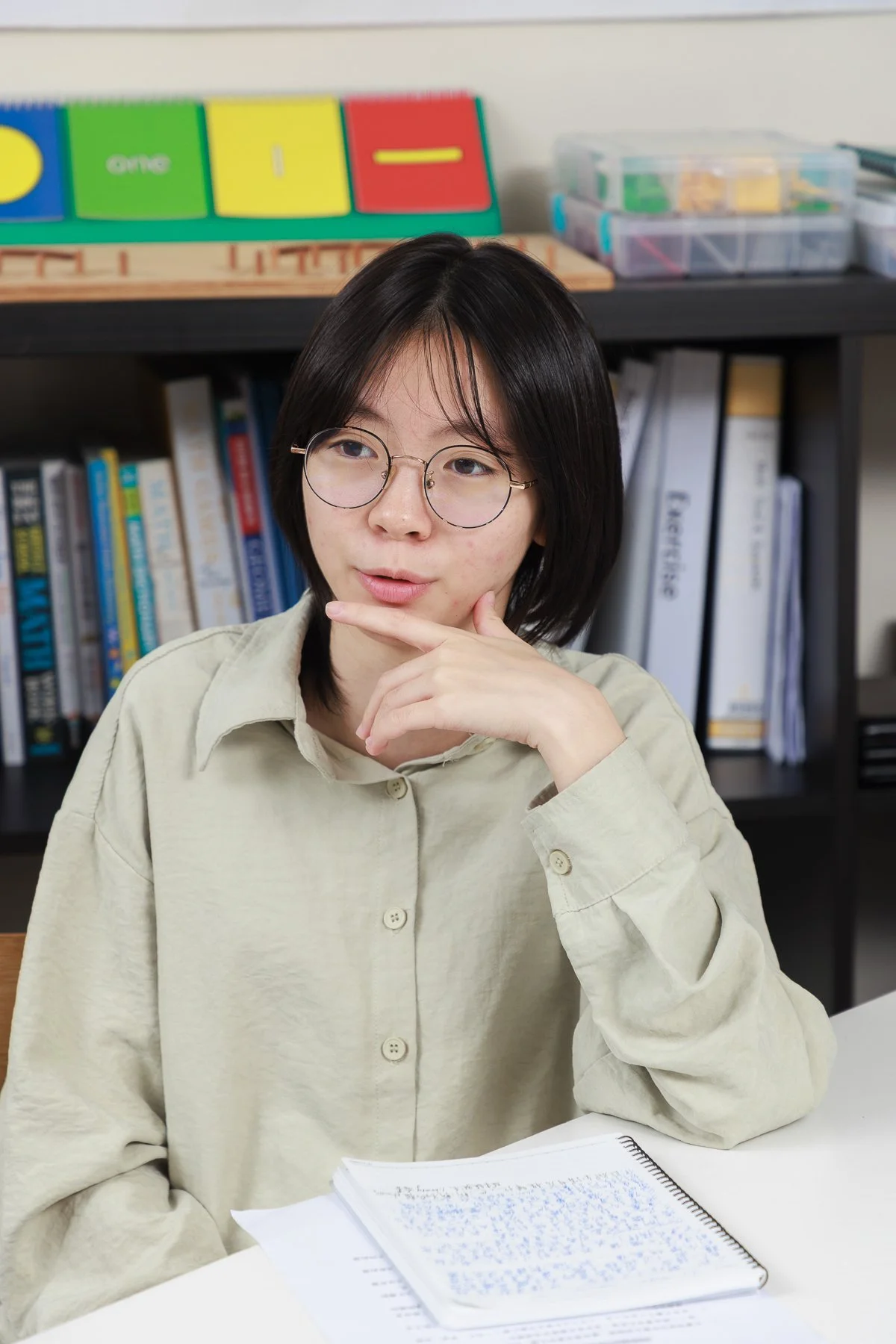
Having broken free from smartphone dependence, Wendy has reclaimed agency over her life. Now, she more deeply enjoys reading novels and the comfortable ease that real life brings.
Coupled with her own desire to be less dependent, Wendy began researching the negative impacts of phones. She discovered that "blue light suppresses melatonin secretion, delaying sleep and leading to poor energy the next day." Through rational reading and nearly four months of adjustment, she successfully reclaimed control over her life.
Wendy, who loves drawing and music, still follows related groups and watches music videos online, but she recently chose to quit social media and delete Instagram. She reflects: "Sometimes, posting freely on social media invites attacks, which makes me anxious. Now that I’m off social media, I feel much more comfortable and at peace."
Investing Time in Sports and Skills Helps High School Preparation
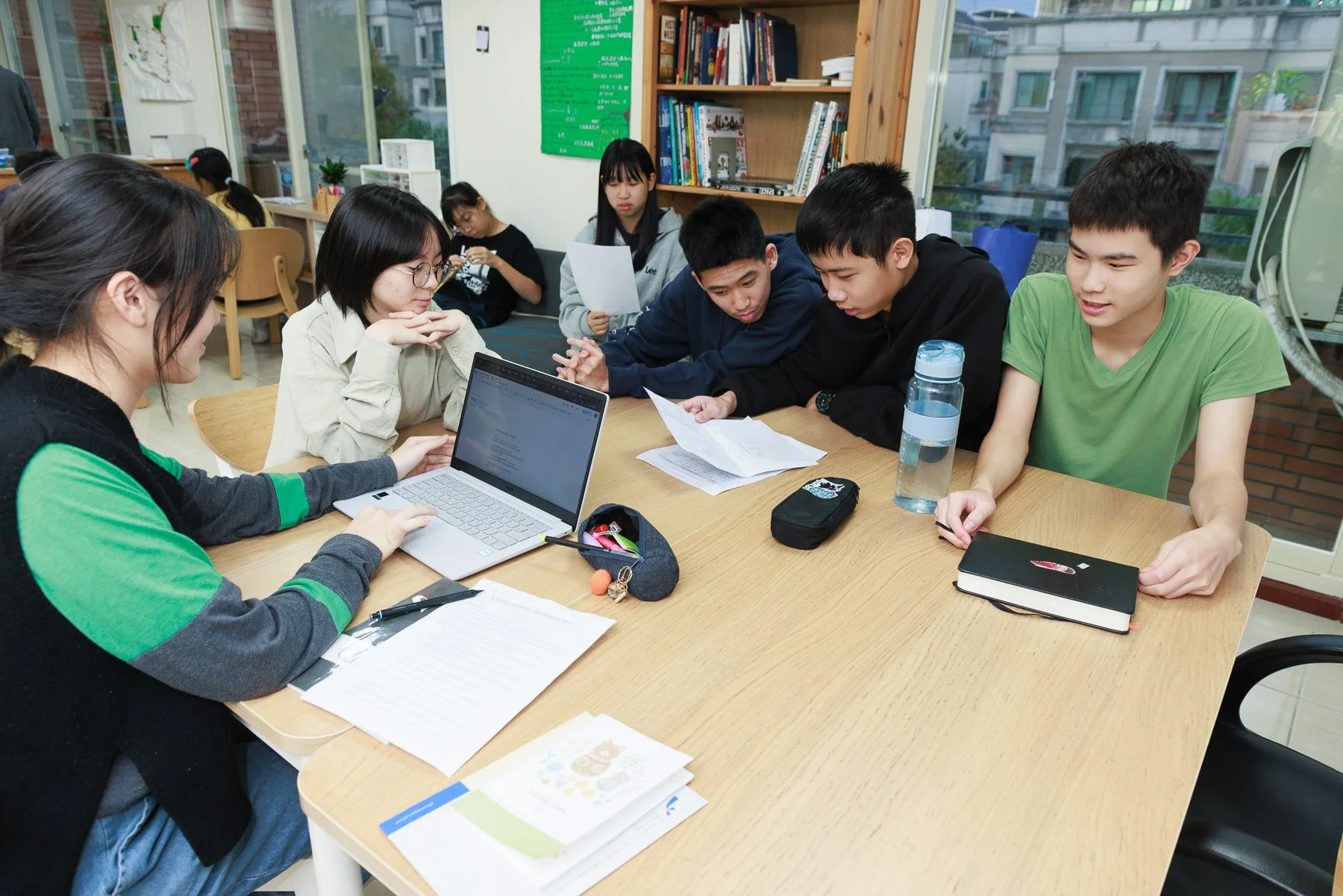
Having moved past smartphone anxiety, Jasper (third from right) now more fully enjoys the focus and pleasure of discussing schoolwork face-to-face with classmates. This authentic connection is more solid and enduring than the virtual world.
Jasper also went through a period of excessive phone use. "I had a phone in third grade for GPS, then in seventh grade, I got one... seeing everyone else playing, I didn't want to stop." Driven by curiosity and social pressure, he once recorded ten consecutive hours of use. When he first enrolled, he even complained privately about the school’s phone collection policy. However, as he matured and understood the intent behind the system, he now feels it is "acceptable to hand the phone over."
With the help of his guide, Fankan, Jasper practiced finding other things to do. His father also set ground rules for internet time. "I can control myself now, but on the weekends, I still really want to play games," Jasper says with a laugh. "Those two days at home, I spend 'crazy' time with my phone—checking apps, scrolling through IG, playing Honor of Kings, watching funny sports videos, or following bike brands." After indulging, he realized: "My focus and efficiency aren't as high as when I’m working (learning) at school."
During this time, Fankan spoke with him about "self-expectation," "improving work," and "taking responsibility." Jasper recalls, "Fankan used many perspectives to let you know where you could improve, not just regarding phone use, but through gradual guidance to make you think about how to use the phone as a tool." Jasper’s takeaway today is: "The phone isn't that important. It’s better to chat face-to-face, play sports, or do homework with friends. We can hang out all day and never get bored."
Montessori Glossary: "Work" in School
In Montessori education, we do not call a student's learning "schoolwork" or "academics"; we call it "Work." In a Montessori primary (preschool) setting, "work" might refer to reading a book or doing a puzzle; in elementary, it is working with materials or exploring the wider environment in small groups; and in adolescence, it is the "practice of real life."
Adolescent "work" includes running a farm, preparing school lunches, developing micro-businesses (such as selling handicrafts), or managing the residential environment. Through these activities—which yield tangible outputs and promote social responsibility—adolescents transform academic knowledge (such as math, biology, or social communication) into problem-solving skills. This "work" helps them cultivate self-discipline, collaboration, and a sense of contribution, leading to self-confidence and a confirmed place within their community.
The Phone Really Isn't That Important
Looking back at this transformation, Wendy wants to share with younger students: "The phone really isn't that important! Adolescents are still developing and are easily addicted. It’s better to focus on studying and working. Also, phone content subconsciously affects your attitude; for example, if someone makes fun of illnesses on social media and brings that joke to school, it’s a bad influence." Previously a reluctant reader, she has now fallen in love with novels, even re-reading her favorites.
Jasper jokes that he always had many interests. If he could do it all over again, he would tell his younger self: "I’d hope he wouldn't be so dependent on the phone. Exercise more. If I had learned more skills then, I would have had more direction entering high school."
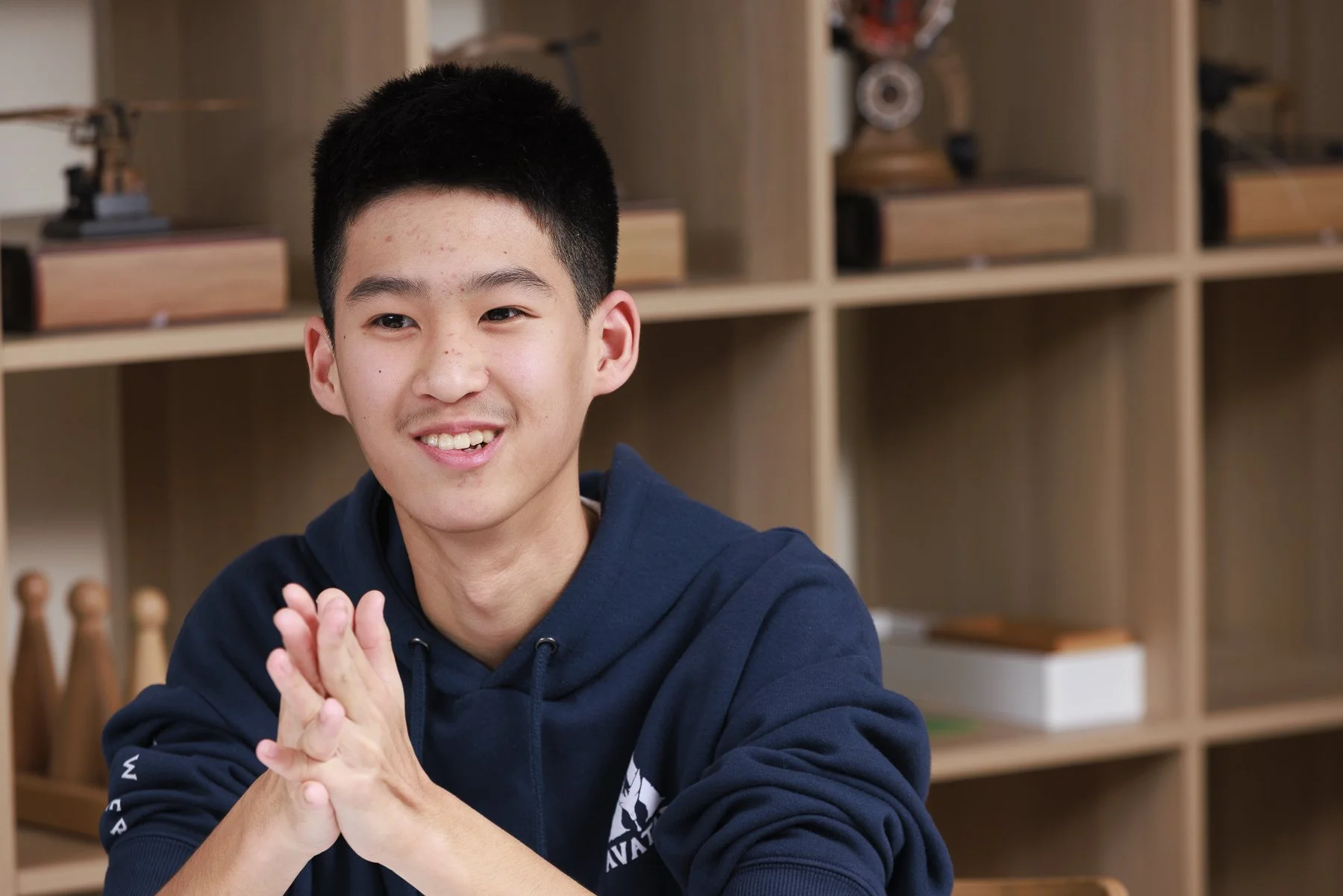
From complaining about the system to fully accepting it, Jasper learned to plan schedules without a phone under the guide’s mentorship. Through sports and learning new skills, he is gradually developing mental resilience.
Helping adolescents understand the impact of phones on their well-being is no easy feat. Montessori middle schools set boundaries through institutional systems, but life at home requires the cooperation of parents. Supporting adolescents in having more interpersonal contact is vital, as they are undergoing the "second birth" of their lives. Only through emotional connection and social responsibility in the real world can they transform into better adults.
Montessori Glossary: The Social New Born
Montessori referred to the first six years of life as the "Psychic Embryo"—the formation of the physical being. In contrast, the period of adolescence from ages 12 to 18 is viewed as the "second birth" of the psychological and social personality.
This is a stage of profound physical and mental transformation, where adolescents are as vulnerable and sensitive as newborn infants. They are undergoing a "reboot" of the brain and a restructuring of self-consciousness, attempting to shift from a dependence on the family toward an exploration of society. During this period, children need to affirm their value through "authentic social interaction" and by "assuming social responsibility." Excessive indulgence in the virtual world deprives them of the opportunity to connect with real society. Therefore, establishing clear boundaries in life is not a restriction; rather, it provides the necessary protection and support for this second birth, allowing them to transition smoothly into independent, confident, and socially conscious adults through stable, physical connections.
Text by Yu-Hsiu Su
Photography by Fu-Sheng Li 李復盛
This article is featured in the Y2 2025 Annual Report.