
Interview with April Chen, 6th Cohort Participant of the Y2 Social Impact Talent Development Program
For 15 years, April lived the enviable life of a flight attendant traveling the globe. However, when a new life was about to "land" in her womb, a journey of self-healing through Montessori truly began. "I came from a broken home, which made me feel very lost about becoming a mother," April admits. After becoming pregnant, she transitioned from flight crew to ground staff, using her extra time to research how to be a "good mother." This anxiety led her to explore various educational philosophies like Waldorf and Reggio Emilia. It wasn't until she stumbled upon a quote by Dr. Maria Montessori—"Sow the seeds, but never look back"—that she realized the first step in parenting is becoming a prepared adult to meet the child’s true needs at different developmental stages.
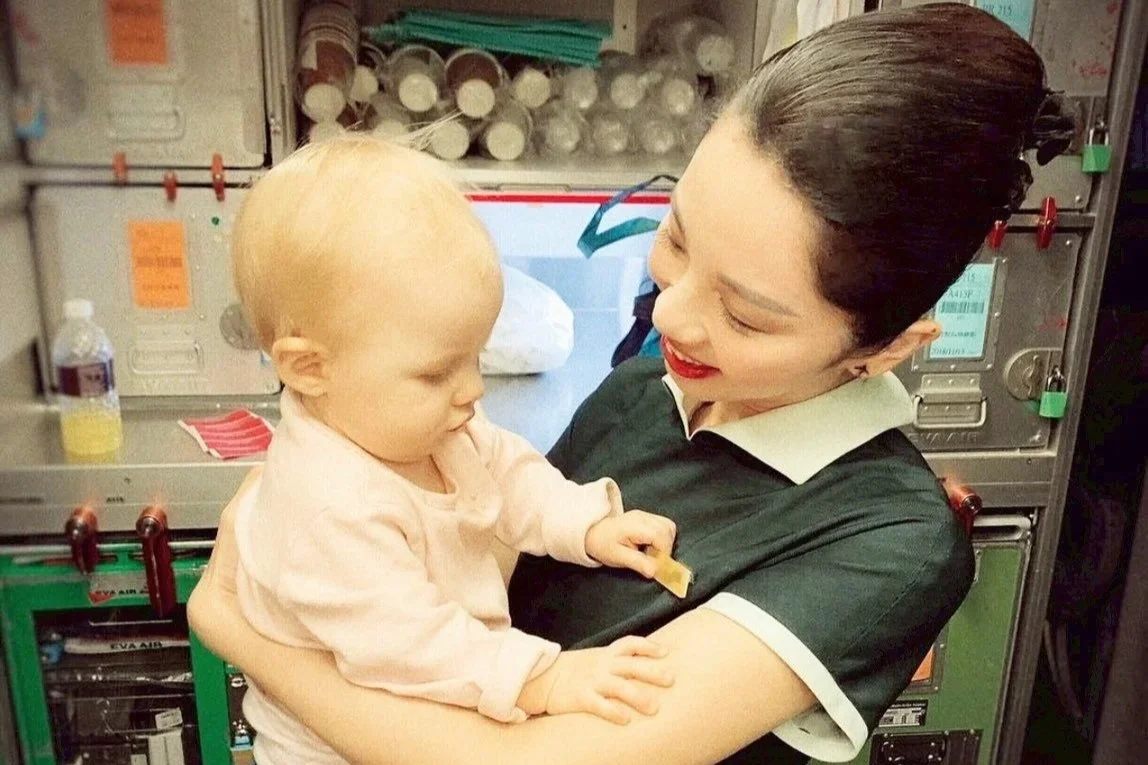
Once an envied flight attendant, April never imagined becoming a Montessori teacher. Life’s unexpected turns led her on a journey of self-healing and educational practice.
"Wow! How can my child sit so quietly in one spot?" Inside the Tra4withkids Montessori Parent-Infant Community, a mother watches in amazement. Her child holds a small pitcher in each hand, carefully pouring water from the left to the right, and back again. This rhythmic repetition continues in serene silence. The mother exclaims, "I never knew my child was capable of this!"
Seeing the surprise on parents' faces, parent-child educator April Chen explains with a smile that the ages of 0 to 6 are a period of sensory exploration. Children are naturally drawn to climbing, grasping, and observing their environment. "They aren't just 'playing' with water; they want to know what water is and how it flows. Why not satisfy that need properly?"
To practice the Montessori philosophy of "Follow the Child," April meticulously selects every piece of material—from a food preparation area at the child’s height to a cleaning tool station, to an art and music corner filled with books. Every corner of the classroom is the prepared environment, tailor-made to allow children to learn peacefully and develop their potential.
The Path to Montessori: The Birth of Tra4withkids Montessori
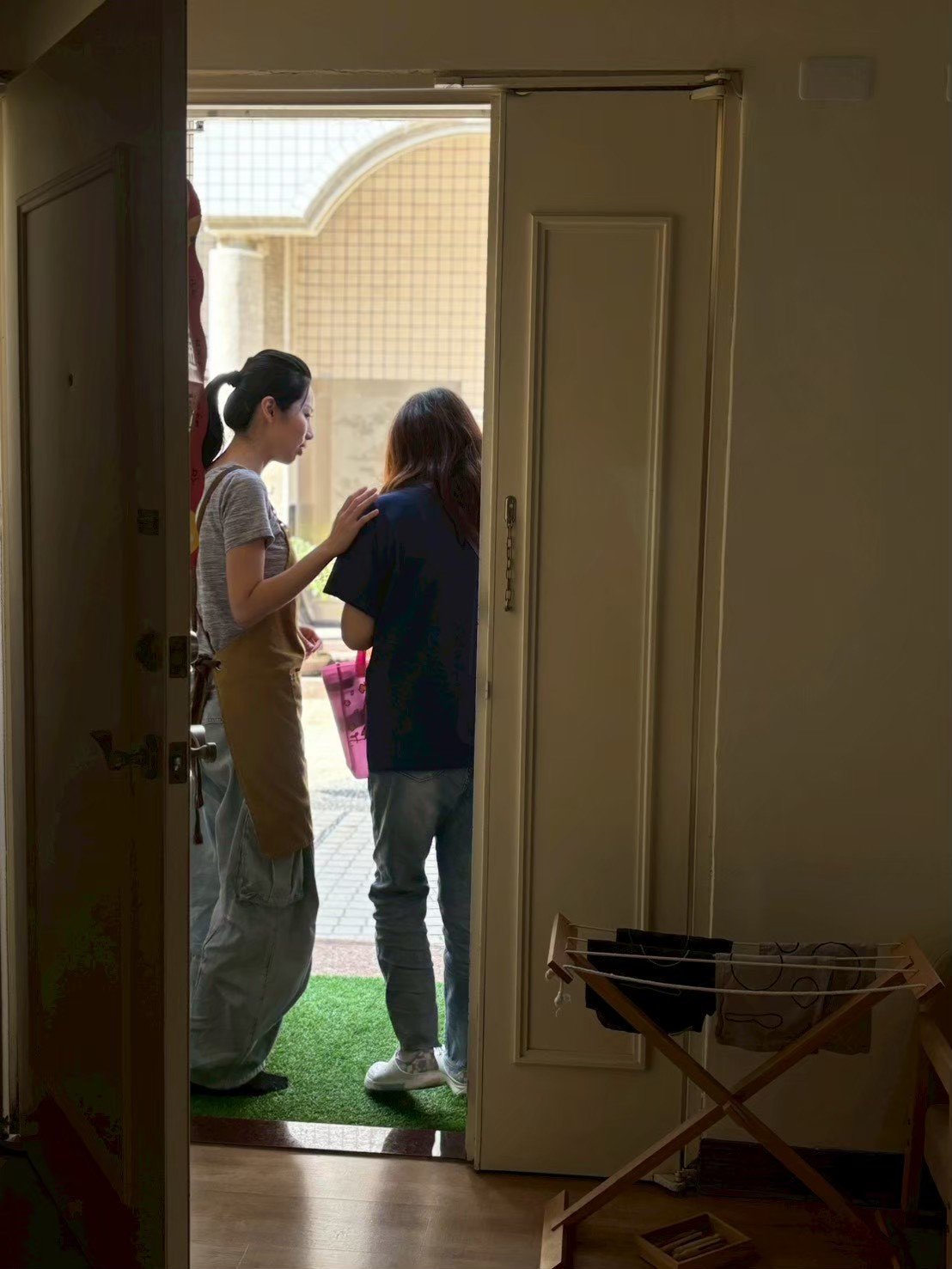
April hopes Tra4withkids provides a supportive space for parents to grow alongside their children and witness the resilience of life during early childhood.
To fully master the Montessori method, April took maternity leave and enrolled in the AMI (Association Montessori Internationale) 0-3 diploma course and applied for the "Y2 Social Impact Talent Development Program," beginning a rigorous two-year training period. Recalling the process, she describes it as "the perfect alignment of time and place." Her daughter’s daycare was conveniently located on a direct bus route to the training center, and with her husband’s full support, April was able to focus entirely on her studies. She firmly believes: "When you truly want to do something, the whole universe conspires to help you."
The solid training allowed April to transition smoothly into an assistant role at a parent-child classroom in Taipei after resigning from the airline. Facing pairs of bright, curious eyes, she guided children to discover their potential and mastered the art of communicating with parents. Later, April officially embarking on her own Montessori journey after she and her husband moved to the Xitun District of Taichung founded Tra4withkids in a lush, green community.
Don't Rush to Correct; Help the Child Do It Themselves
Inside April’s classroom, one child sits at a low table, using tweezers to sort colorful pom-poms into matching bowls; another uses a spoon to scoop coffee beans, listening to the rustling sound they make against the glass; yet another carefully observes a peer, learning through imitation to complete a task independently. This is the daily rhythm of the classroom, showcasing the incredible focus children possess within a prepared environment.
April shares a story of a new student practicing the pom-pom sorting task. The parent nearby couldn't help but intervene: "The red one goes there!" and "You're doing it wrong!" Frustrated, the child threw everything onto the floor. The mother then shouted, "I told you not to do that!"
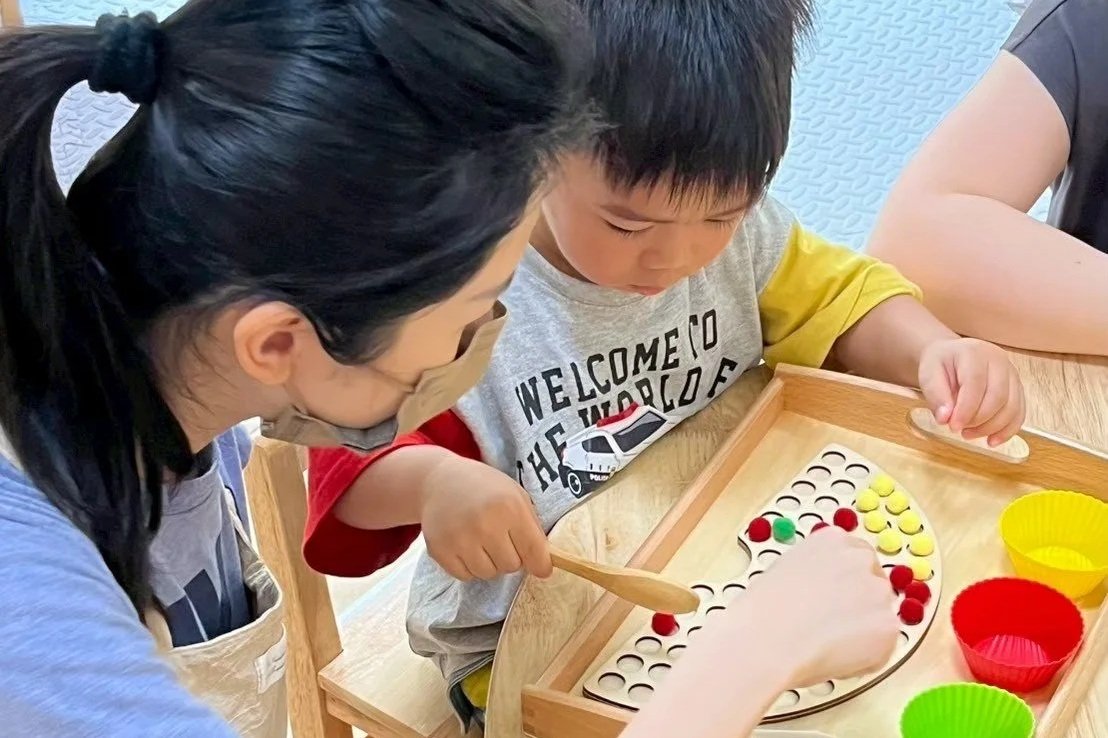
April: Don't rush to correct; help the child do it themselves.
Seeing the situation, April walked over, knelt down, and looked calmly into the child’s eyes, saying: "There are so many pom-poms on the floor; other children might step on them when they pass by. I will help you gather them together first, and then you can slowly pick them up and put them back into the bowl."
Understanding the Need Behind the Behavior
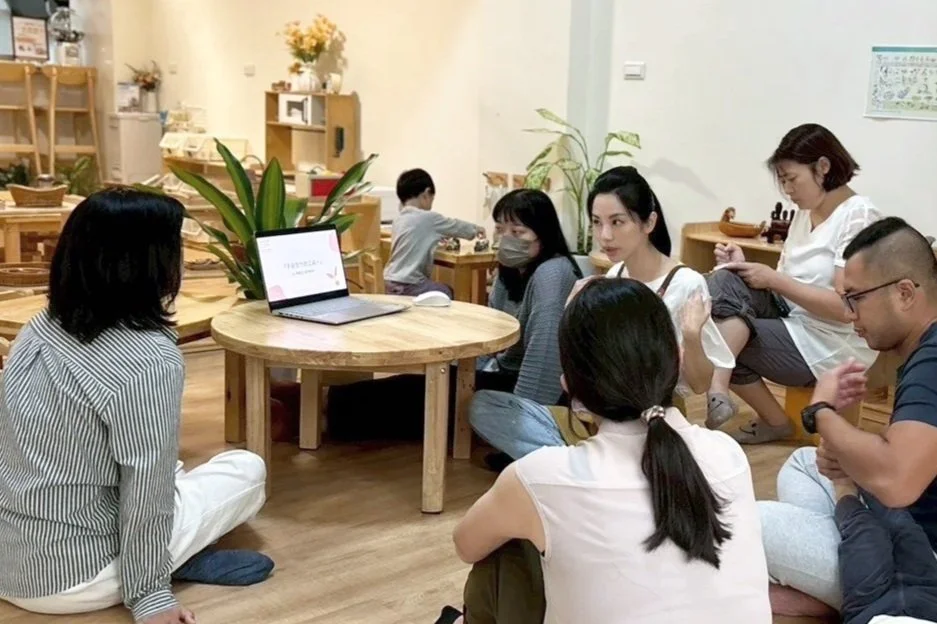
15-minute mini-lectures after class connects April with parents. Through discussion, she helps them navigate parenting challenges and recognize the true needs of their children.
Before the end of each session, April holds a 15-minute mini-lecture to communicate parenting concepts. Once, a parent said: "My child is two years and eight months old. He doesn't wear diapers at home, only when we go out." April then asked, "Can he come to class tomorrow without a diaper?" Instead of giving a standard answer, April asked questions to uncover the parent’s underlying concern: Why does he wear them when going out? Do you feel he is ready? If he is ready, do you think he still needs to be reminded?
"Constant reminders are actually a display of distrust," April points out. Only by understanding the need behind the behavior can we allow a child to grow independently.
The process of talking with parents also allowed April to examine the cracks in her own original family. In the past, she was troubled by the distant yet entangled relationship with her mother. After studying Satir’s family therapy, she began to think: "Perhaps my mother also grew up in an environment that was not 'prepared.'" Looking at family relationships from a different perspective allowed old emotional knots to slowly loosen. "In addition to looking at children with curiosity, we must also look at parents with curiosity,"
April describes. Learning alongside children and parents is like sowing seeds in the earth. From changing one person to changing a family and finally empowering someone to change others, this influence expands further and further…"One day we will discover that the true end of education is not to create a genius, but to fulfill a 'whole person.' When we learn to truly see the child, see the parents, and see ourselves, this awareness is no longer just personal growth. It empowers every life we encounter to become a light, warming another soul."
Text by Vivian Chan
Photography by April Chen
This article is featured in the Y2 2025 Annual Report.