
Interview with Pei-Jung Wu, 6th Cohort Participant of the Y2 Social Impact Talent Development Program
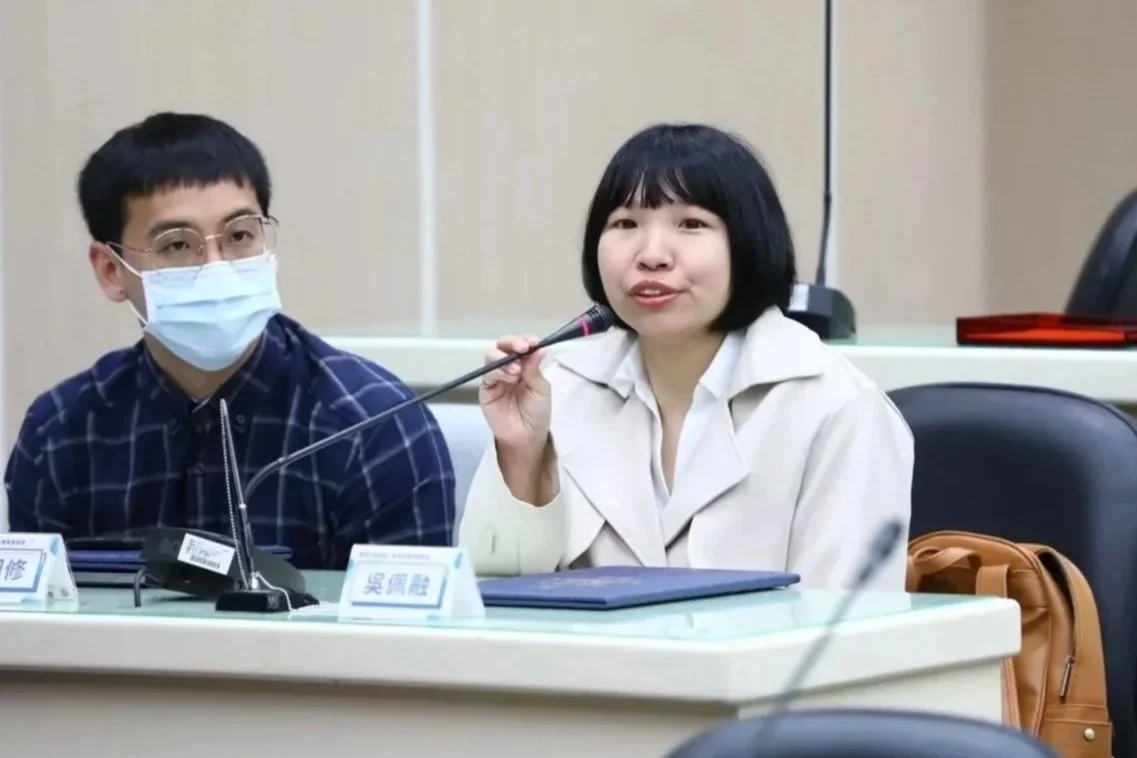
Serving as a member of the first Keelung Youth Committee, Pei-Jung connects long-term care resources to spread her influence to every corner of society.
"Grandpa, you speak Japanese, don’t you? Would you like to teach everyone to sing a Japanese song?" During karaoke time at the Da-Qing Community Long-Term Care Institution in Keelung, Director Pei-Jung Wu softly inquired of an elderly gentleman. Due to Parkinson’s disease, his movements were slow and his speech was stuttered. However, Pei-Jung discovered that because his wife was a Japanese teacher, he was able to bypass the effects of his condition only when singing in Japanese. She invited him on stage to lead the singing, transforming him from a passive patient into a Japanese teacher with glowing eyes.
"His wife said he prepared very seriously at home, hand-picking the YouTube videos and deciding exactly how much to enlarge the lyrics!" When discussing her interactions with seniors with dementia, Pei-Jung, who has a background in nursing and a Master’s in Neuroscience from National Chengchi University, smiles warmly. She admits her passion for long-term care sprouted as early as the fifth grade.
From Nursing to the Frontlines: Opening the Montessori Eyes
In 1999, Pei-Jung’s father survived a severe car accident. Post-surgery, his speech, memory, and mobility were impaired, leaving him hospitalized for five months. "Half a year later, the attending physician asked my mother: Should he go home or transfer to a care facility?" The scene left a deep impression on the then 11-year-old: "My mother was stunned. She simply couldn't make a decision." Due to a lack of long-term care resources at the time, her father did not meet the criteria for available services, leaving the mother and daughter to care for him at home alone.
This experience became her motivation to dive deep into nursing. Outgoing by nature, Pei-Jung stepped into dementia service centers, day-care centers, and home-care units with her expertise to accompany seniors. She jokes that "the daily life of a caregiver is weaving through the seniors," which involves more than just feeding, hydration, and medication reminders.
It also requires designing activities to engage them. Her interest in Montessori for Dementia and Aging was planted when she first visited the Da’an Senior Service and Day Care Center. "I was curious why there were black-on-yellow instructional signs everywhere." After an explanation from a social worker, she realized these were environmental cues to guide seniors in using materials and finding items.
Pei-Jung was both surprised and delighted: "How did they think of this?" This is what Montessori calls the "prepared environment." Following this enlightenment, she couldn't help but wonder: In an environment where one caregiver looks after 6 to 8 seniors, is it possible to implement this kind of individualized, dignified care?
Seeing the "Can": "I Already Had the Ability to Finish This"
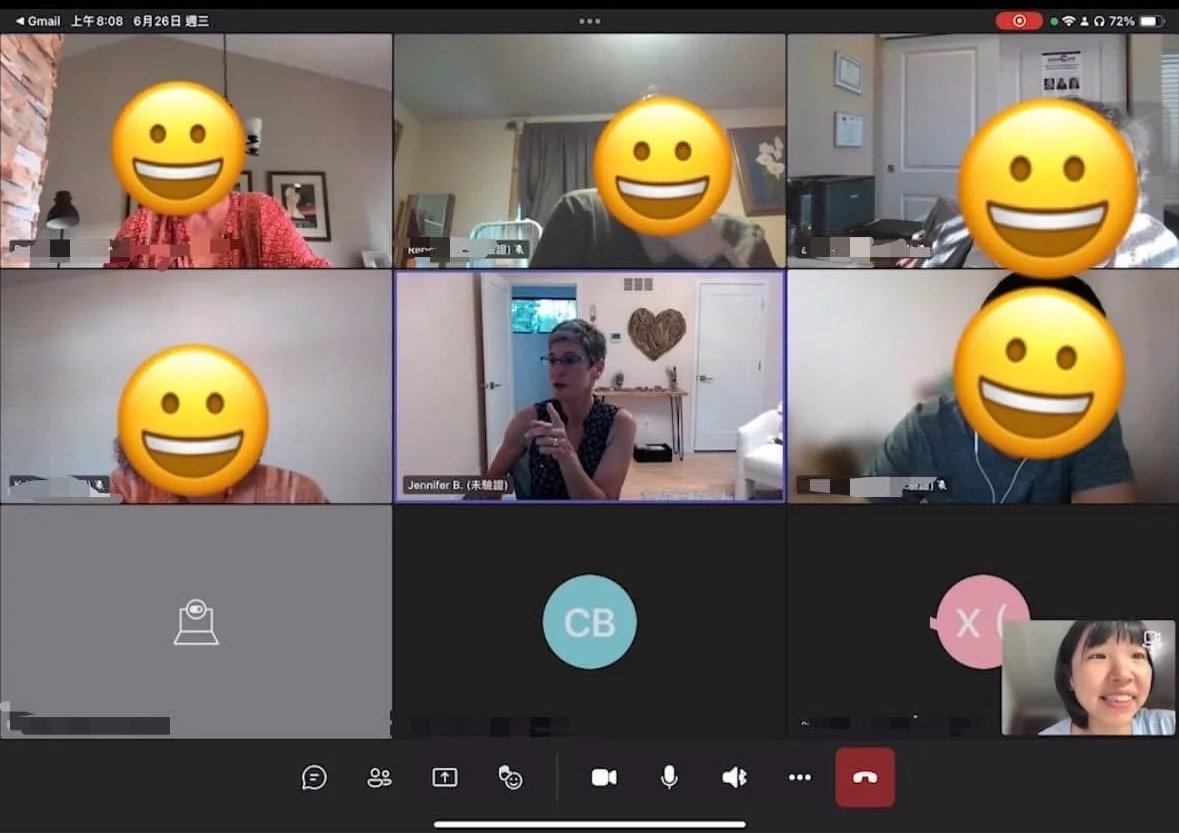
Pei-Jung presenting her final reflections for the AMI Montessori for Dementia and Ageing international training. For Pei-Jung, this was more than a professional challenge. It was a journey of learning to help others' potential which was achieved step by step during the quiet nights after her children had fallen asleep.
Implementing a philosophy on the frontlines requires a key catalyst. As a day-care center director, nurse, and mother, Pei-Jung smiles casually when discussing her application for the "Y2 Social Impact Talent Development Program" to receive AMI (Association Montessori Internationale) training for Dementia and Aging. "My learning starts at 9:30PM after the kids go to sleep!" Despite the challenges of an all-English curriculum, she persisted, determined to bring her learning back to the workplace.
After completing the training, the first thing she did was observe the caregivers on-site. "I listen to how they communicate with the seniors and encourage those who are willing to start by understanding the senior's hobbies or strengths." For example, for a senior who enjoys landscape painting but suffers from hand fatigue, they printed A3-sized floral patterns to make painting easier.
For those who love cooking, they organized classes where, with family consent, seniors could chop vegetables and rediscover the joy of learning by doing. For those with more advanced cognitive decline, Pei-Jung and the caregivers designed daily challenges, such as pre-squeezing toothpaste to the top of the tube so the senior only needs a tiny bit of strength to finish the task, thereby exercising small hand muscles.
Pei-Jung says the Montessori mindset is about seeing what a senior "can" do, rather than fixating on what they "cannot" do. Naturally, there are many challenges. For instance, encouraging a senior accustomed to spoons to practice using chopsticks often results in food falling all over the place and longer meal times. "I encourage the families to let the seniors practice as much as possible, and the caregivers are usually very willing to cooperate!"
Pei-Jung shares that she is also attempting to bring Montessori care into home-care services: "For example, asking a senior to practice setting the table or letting them bathe themselves for five minutes with a caregiver nearby. These all require prior discussion with families and staff." She admits some families refuse out of worry, while others understand the intent."Everything must be taken step by step to create space for trial."
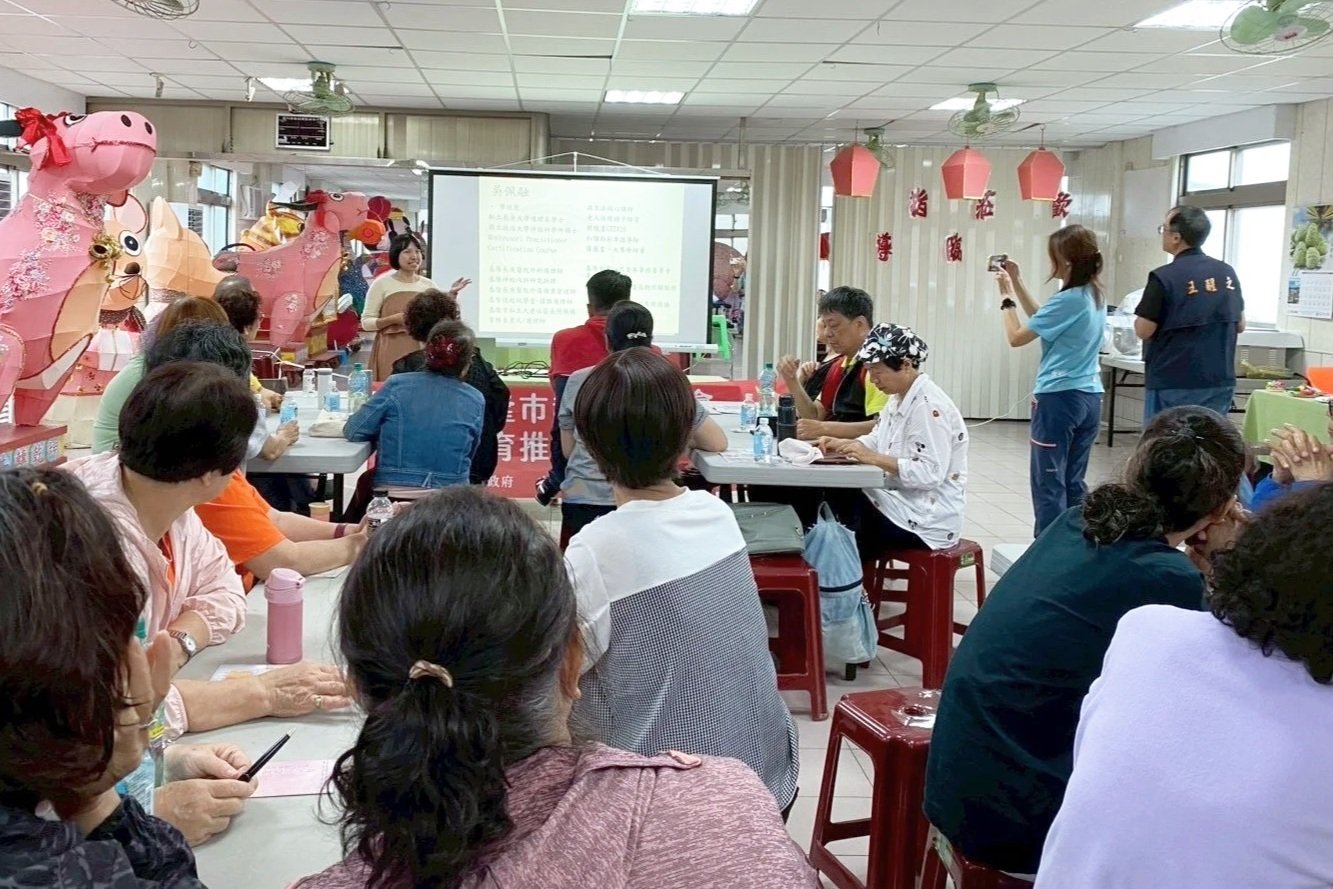
Collaborating with the Chun-Feng Cultural and Educational Foundation, Pei-Jung enters communities to share the "Patient Right to Autonomy Act." Beyond care quality, she empowers seniors to understand their right to express their own will, safeguarding the dignity of life.
The Long Road of Care: Doing My Best to Help Their Best

Pei-Jung shares picture books about dementia with thirdgrade students. Through education, she guides the next generation to understand "decline" and learn to see the inherent value of seniors through "Montessori eyes."
Many share a common doubt regarding dementia care: Does this path eventually just lead back to where we started? Though the government promotes "Long-Term Care 3.0," and budgets and medical integration increase, there is still a gap between intake difficulties and family expectations.
One family member once told Pei-Jung: "I’m grateful for the activities at the center, but at home, we have no motivation. A child’s growth is something to look forward to, but a senior is just constantly declining."
These words haunted her, and she once broke down to her husband, asking, "What am I doing all this for?" Surprisingly, her husband listened and simply asked: "So, are you going to stop doing it?" This was a wake-up call that gave Pei-Jung her answer.
Her desire for more people to see the abilities of seniors pushed her out the door of the day-care center to do what she can to support others' potential. Currently, in addition to serving as a member of the first Keelung Youth Committee to connect long-term care resources, she spreads her influence through Montessori care lectures. On the long road of care, Pei-Jung is no longer lost: "I want to see what else I can achieve within the scope of my ability."
Text by Vivian Chan
Photography by Pei-Jung Wu
This article is featured in the Y2 2025 Annual Report.