
Interview with Chris Marks, Curriculum Lead of Junior High Department at Y2MAC
Departing from the typical image of a "teacher," Chris Marks, who recently joined the Y2 Montessori School-Adolescent Community (Y2MAC), says with a smile that he is not an educator driven by a traditional "passion for teaching." Instead, his rich and colorful life experiences, combined with his inquiry and longing for education after becoming a parent, led him to devote himself to Montessori.
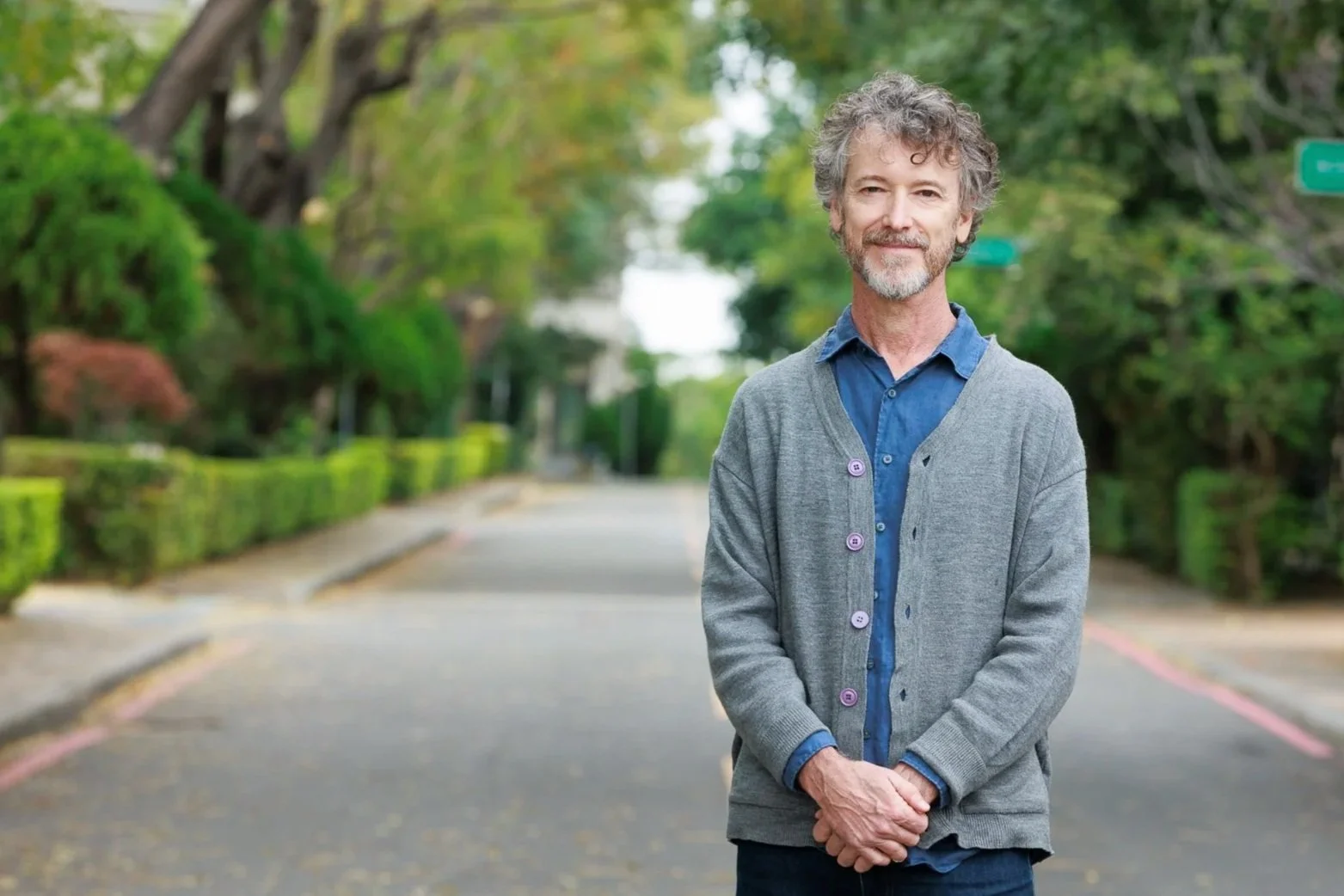
Insights from a Touring Band Manager: "Figure it out!"
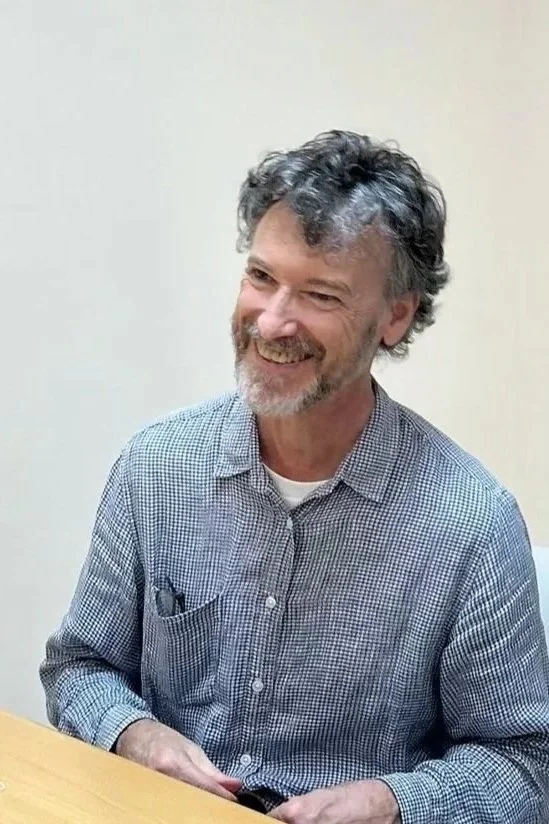
Hailing from Canada with curly hair and a shy smile, Chris possesses over fifteen years of experience in the film industry and music production. He served as a Touring Technician and Tour Manager for international bands. At his peak, he spent up to 200 days a year on tour buses and in venues. "We often finished tearing down equipment at 2 a.m., then had to sleep directly on the bus to rush to the next city," Chris says nonchalantly. His band even once had the incredible experience of opening for the legendary Rolling Stones! During those high-pressure years, which he describes as "relentless," Chris developed strong practical skills and flexibility. "When problems arise at a tour site, there’s no time to complain; you must 'figure it out' immediately."
To the adolescents at a Montessori school, the Rolling Stones might seem a bit distant. On the day of the interview, Chris was tinkering with a leather coin purse prototype, thinking about how to lead students in developing a "small business" in the future. "I see myself as a 'practitioner of life.' I love challenges and hands-on work; Montessori suits me perfectly," Chris says with a wink.
Finding an Education That Is No Longer “Boring" for Children
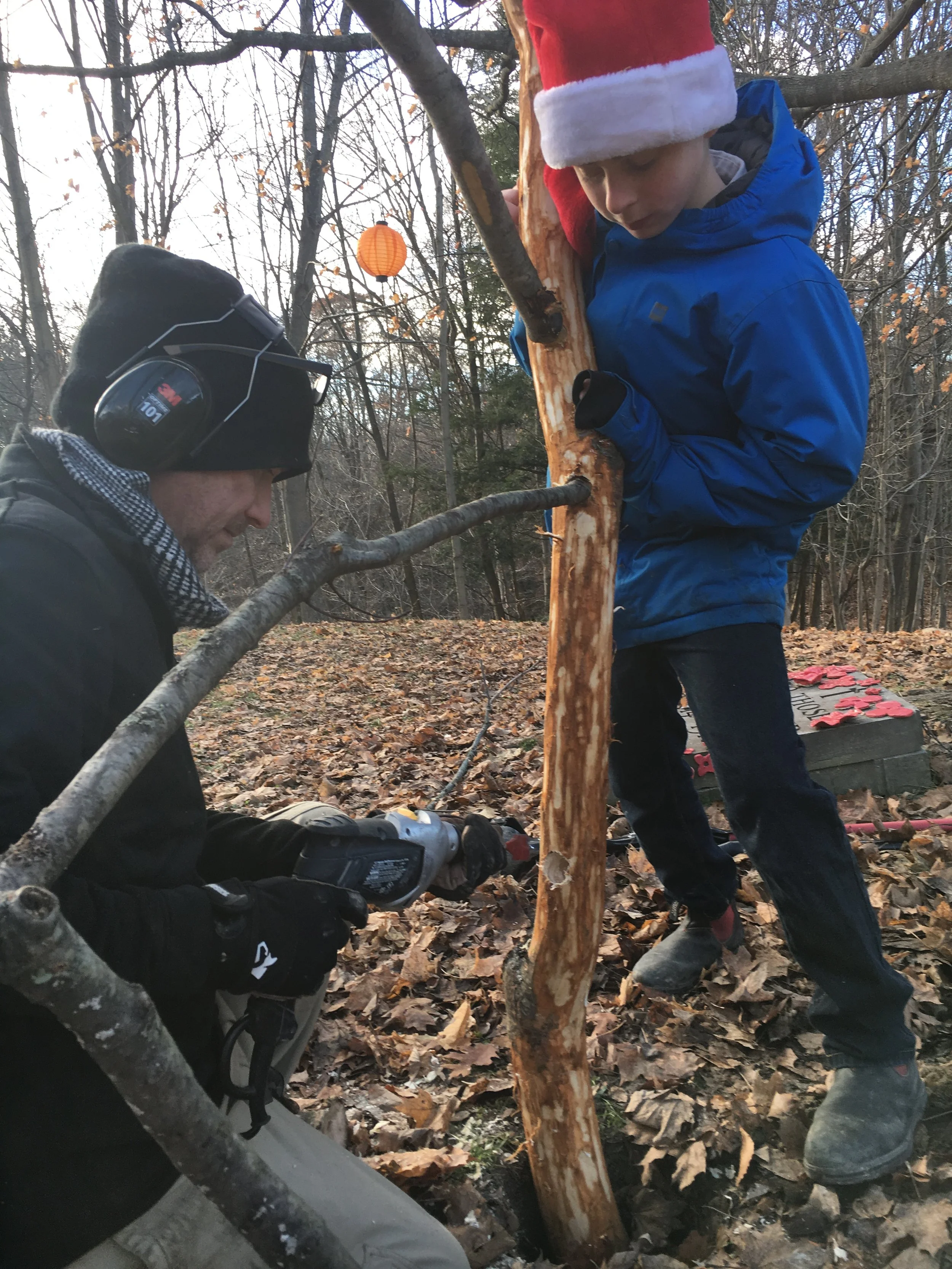
Chris’s vision of a "safe-to-fail" learning environment perfectly aligns with the Montessori philosophy.
Chris mocks his younger self as a child who "hated school." He observed that traditional schools are often designed for children who "perform well and conform to the system." However, for many highly creative and quick-thinking children, the traditional system only means endless "boredom." This leads such children to be labeled, unable to be themselves. "Many so-called 'problem students' aren't actually unintelligent; they are just bored with the existing system," Chris analyzes.
When his first child was born, Chris realized that touring with a child was unsustainable. He worked hard to find alternative educational methods, which prompted his transition from band manager to the field of education. He hoped his child could grow in a "safe environment where failure is allowed," and Montessori philosophy happened to coincide perfectly with this vision.
Montessori education emphasizes the power of community. When he and his partner Emily Dowell chose to return to Canada to launch a Montessori project, his former touring partners generously reached out. In a moving gesture, they organized benefit concerts to support his educational vision. Chris says touched: "These friends from the music scene in Toronto and California walked into our cramped space without a second thought. Many are famous now, yet they still return regularly to perform for art and education."
These old friends not only performed but also donated signed items for charity auctions to provide funds for the school. This experience made Chris deeply realize that education is not just about teachers and students; it is about the "power of community." He still remembers the support of his friends, which ensured that children would "no longer be labeled as problem students."
Observations of Adolescent Montessori Education
in Canada, Japan, and Taiwan
As their daughter grew up and left for university in Ottawa, Chris and Emily departed from Ontario to begin a global "grand tour" of Montessori education. Before coming to Taiwan, they served at a Montessori school in Tokyo. This teaching experience across three countries gave Chris profound insights: although "child-centered" is the common language of Montessori across borders, the environment and system determine the "concentration" of the education.
In Canada, education emphasizes "dedication to the community." Chris gives an example: two middle school girls observed food waste at school and spent nine months recording the weight of leftovers from every meal. After data analysis, they found that "when the kitchen served a certain type of pasta, food waste surged by 40%." With objective analysis, they successfully optimized the school menu and overturned the food waste situation. Chris points out: "The value of this project wasn't how much money was saved, but that students used observation, experimentation, and data analysis to reach a solution, exerting influence through their own power."
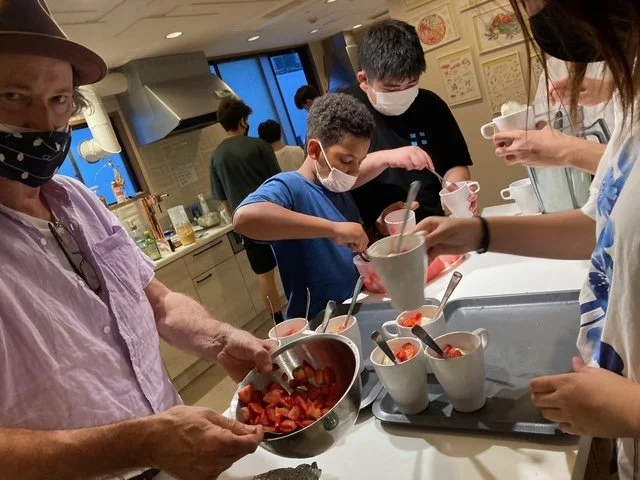
The experience in downtown Tokyo presented a different challenge. In the densely populated city, students generally returned home immediately after school, making relationships relatively distant. Japanese students were used to bringing lunch boxes or buying lunch at convenience stores. However, in the Montessori system, kitchen work is a vital learning process for adolescents. Emily, then a class guide, worked with students to successfully operate within the existing budget, allowing students to prepare lunch at school two days a week. This gave students the opportunity to understand and care for the needs of others through meal preparation. However, Chris admits, "It's hard to make it real when it's just every once in a while."
This interference with "authenticity" also came from the universal issue of mobile phones. Chris recalls that the Tokyo school previously had no policy for collecting phones. Students' minds were often suspended on messages coming from their bags, and that digital anxiety deeply affected learning quality. He describes phones as a giant "time suck" that makes students passive recipients of information, causing them to lose the opportunity to actively explore the world.
Therefore, when Chris saw Y2MAC’s current mobile phone management policy, he gave it high praise. He observed that when phones are managed systematically, adolescents have "extra time" to try new experiences and face communication and friction among peers. This focus on returning from the virtual to reality is crucial for adolescents at the stage of "forming who they're going to be." This also explains why Y2MAC’s residential life and farm system gave him a sense of "amazement" that is difficult to achieve in other cities.
A Cross-Border Educational Vision:
From Resonating Ideals to Rooting Overseas
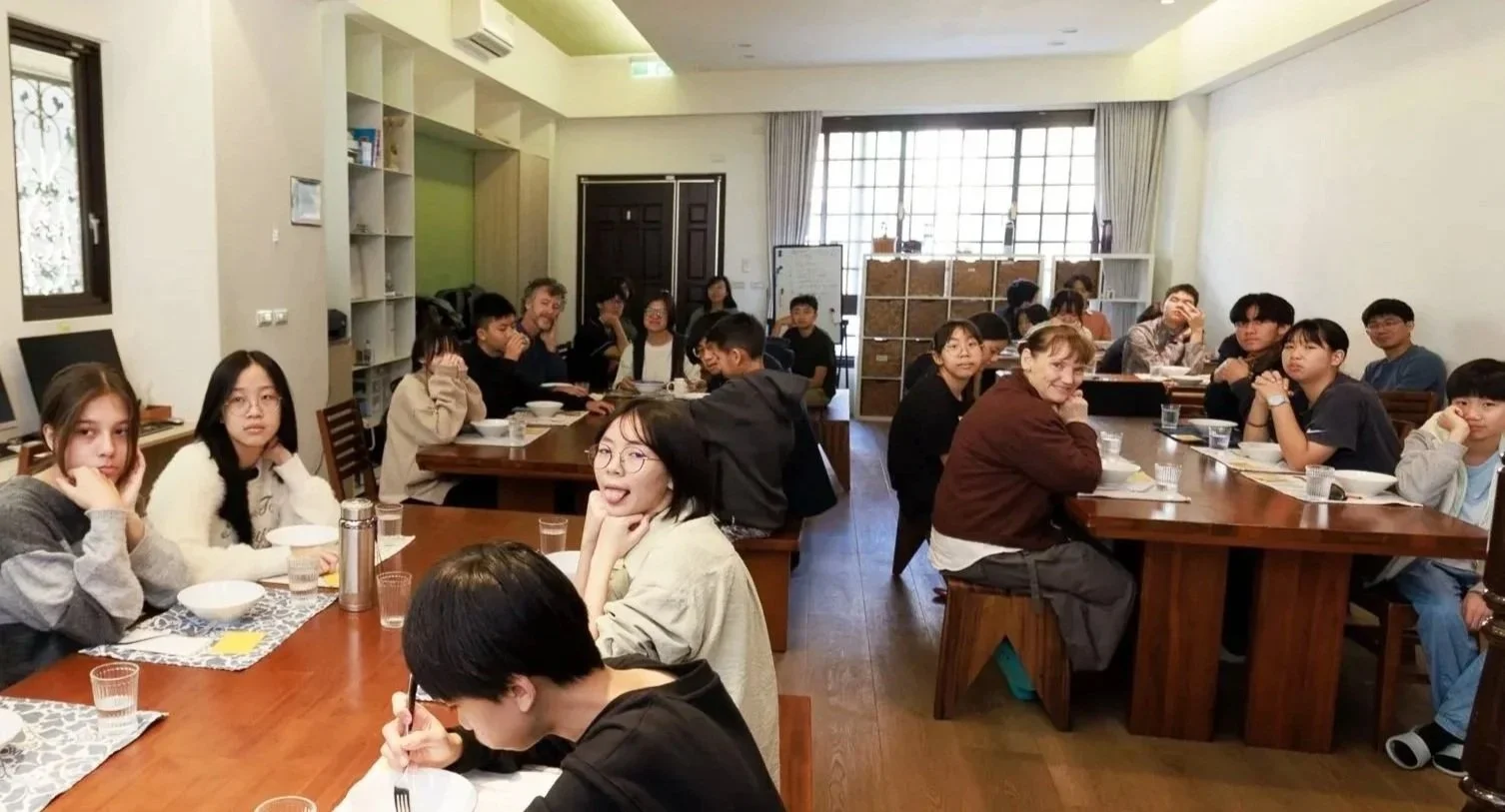
Y2MAC’s residential program fosters growth through direct peer interaction and conflict resolution. Free from smartphone distractions, students focus on their learning and presence, building deeper, more authentic bonds.
What chance led this educational couple to choose Taiwan? In fact, before formally joining Y2MAC, Chris already knew the Head of School, Jan, and had been following the school’s progress from a distance for years. In Chris’s eyes, Y2MAC under Jan’s leadership is not just an educational institution, but a highly vibrant and stable community.
The full boarding system and the well-functioning farm on campus especially impressed him. He pointed out that in Canada or Tokyo, most schools are commuter-based; students go back to their respective family environments after school, and Montessori education effectively stops the moment class ends. In contrast, Y2MAC’s boarding system provides adolescents with a complete space for growth. Students must face various frictions and learn to communicate with peers. Without the interference of phones, they can focus more on learning and "authentic" interaction, leading to closer connections. At the same time, in Montessori adolescent education, the farm is not just a base for food production; it is a practical arena where children connect with the land, practice micro-economics, and develop social responsibility.
This model, which emphasizes "real life," perfectly matches the educational ideals held by him and Emily. As the opportunity to establish the high school department arose, the two practitioners decided to accept this new challenge and settle in Taiwan. Now, Chris serves as the Curriculum Lead for the junior high department, while Emily, who is undergoing AMI Montessori 12-18 trainer training, serves as a Guide in the senior high department. Together, they use their respective expertise to help Montessori take root and grow in Taiwan.
A New Starting Point in Taiwan
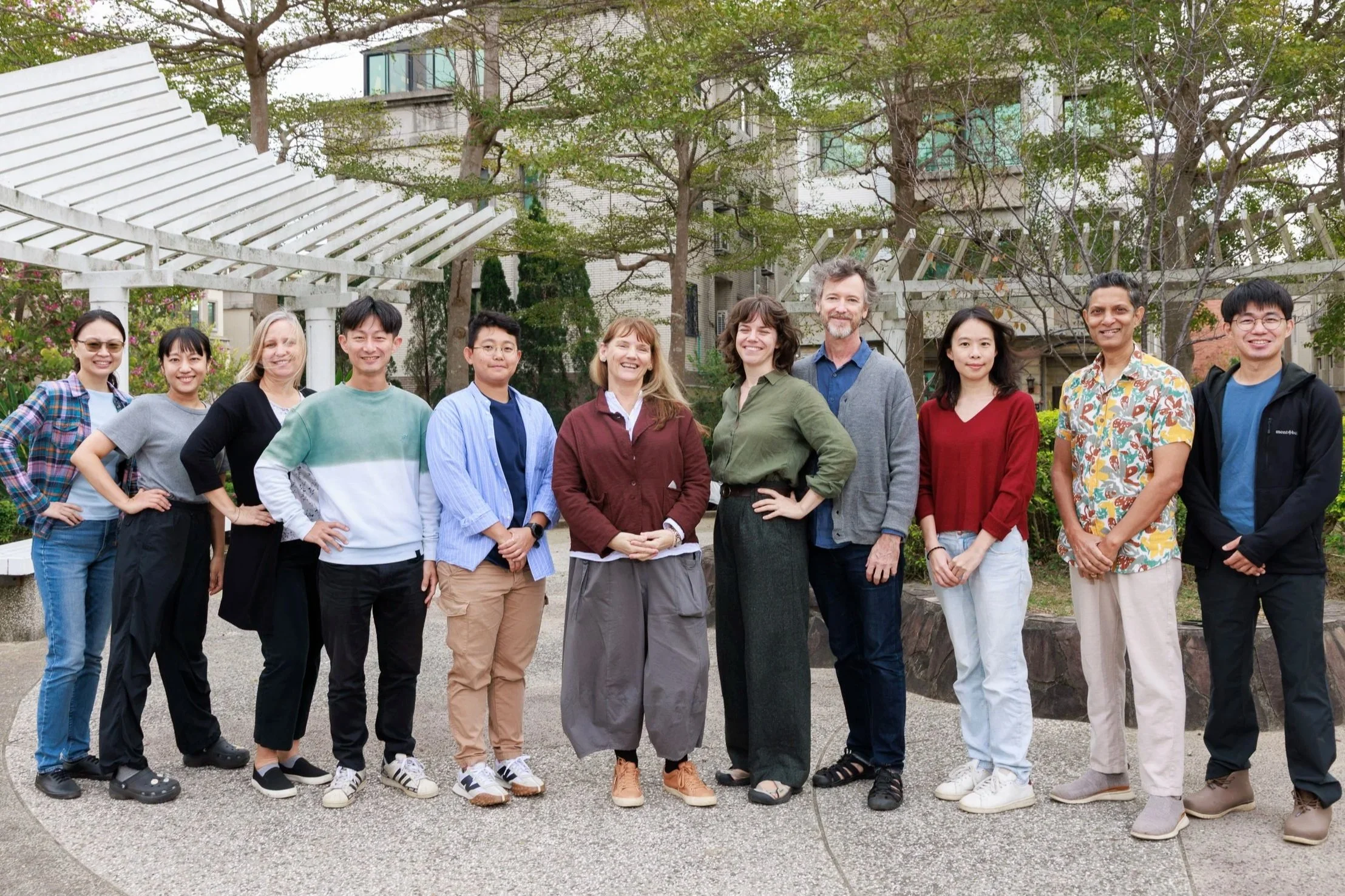
From developing curricula to collaborating with school teams, Chris and Emily (fourth and fifth from right) are energized by the passion and camaraderie of the community.
For Chris, these few months in Taiwan are not just a continuation of his career but a practice of his ideals. This passion for education has translated into concrete action; he and Emily are looking for a long-term residence near the campus, preparing to sink deep roots in this land.
Standing at a critical moment in Y2MAC’s development toward the senior high department, Chris admits he truly enjoys the educational potential shown here. Whether it is curriculum development, the camaraderie of working with the school team, or warm and friendly new friends, it all feels invigorating. This life practitioner, who has toured everywhere and seen the world's many faces, has now chosen to stop at this quiet, green community campus in Hsinchu. With a steadier rhythm, he is turning his past life experiences into nutrients for adolescent growth, playing a new movement in the symphony of his life.
Text by Yu-Hsiu Su
Photography by Fu-Sheng Li 李復盛
This article is featured in the Y2 2025 Annual Report.