
Interview with Tung-Liao Cheng, Project Lead of the Taiwan Montessori Education Center (TMEC) at National Chengchi University
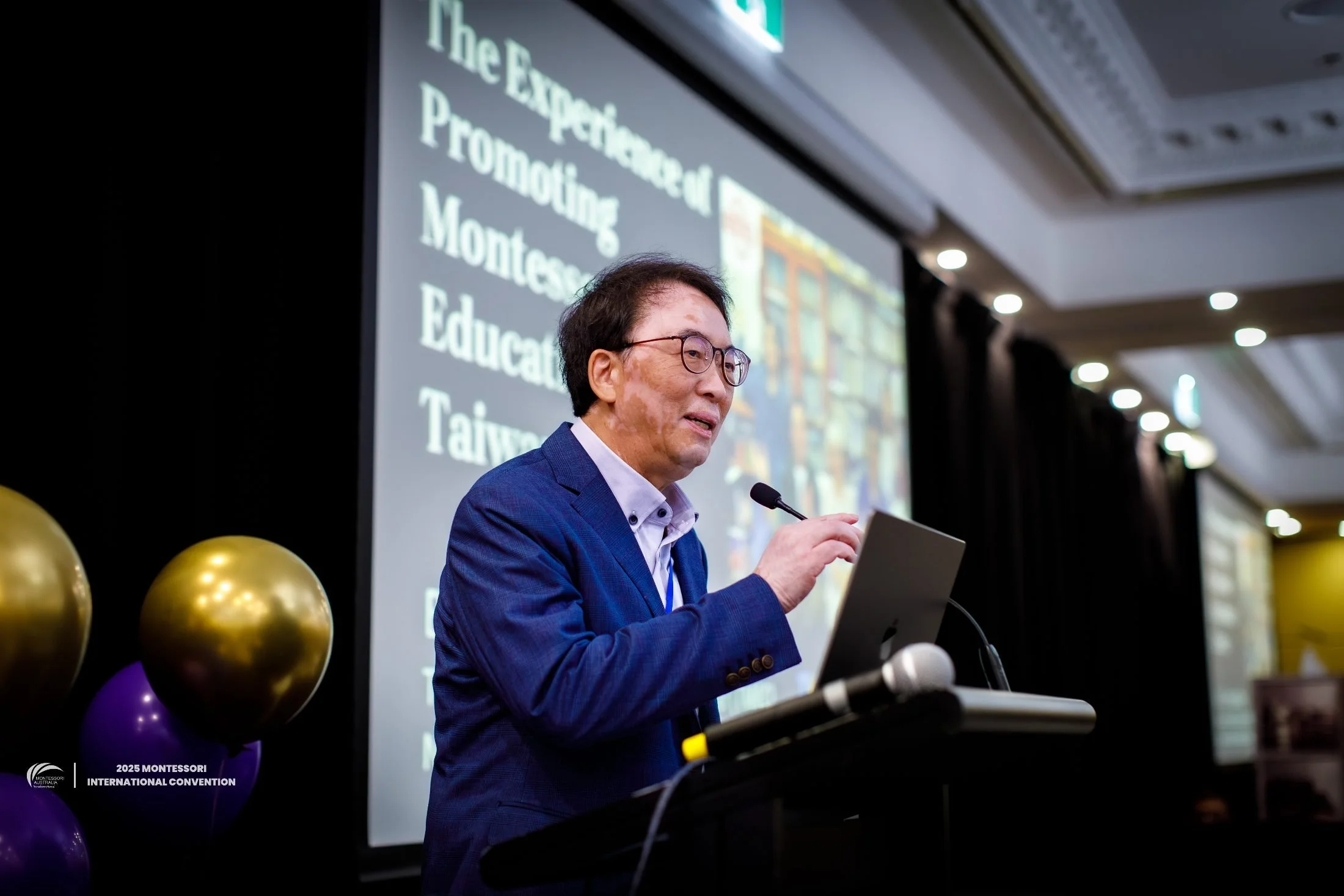
Professor Tung-Liao Cheng sharing Taiwan’s practical experience in promoting Montessori education with international peers at the Montessori International Convention in Australia
Since 2018, the Y2 Foundation for Future Education and TMEC have collaborated on the "Accessible Montessori Program." Professor Tung-Liao Cheng, the Principal Investigator of TMEC, has been consistently dedicated to advocating Montessori philosophy, cultivating teacher training, and accompanying public schools through their transformations. In 2025, Professor Cheng was invited to the Montessori International Convention in Australia to deliver a speech titled "The Experience of Promoting Montessori Education in Taiwan." This was more than an experience sharing. It was an opportunity to showcase the vitality of Taiwan’s diverse educational landscape to the world.
Behind the international recognition at the convention lies more than five years of solid local practice. Professor Cheng noted sentimentally that Taiwan's experience resonated internationally because we have truly touched upon the paradigm shifts within the existing educational system. To him, promoting this model in public schools is not just about funding or investments in hardware. It is a transformative journey of perspective, courage, and companionship.
Four Practical Challenges of Entering the Public Education System in Taiwan
Professor Cheng believes the first challenge in establishing a Montessori school is the "resource threshold." In the Montessori elementary stage of ages 6–12, which emphasizes learning through "work" that simulates real life, classrooms require specialized materials, spatial renovations, and staffing to support multi-age groupings. Both the costs and the environmental adaptation are high. "One classroom costs about 500,000 TWD, which is difficult for many public schools. Fortunately, Y2’s resource injection allowed schools to focus on improving teaching quality," Professor Cheng said, acknowledging the Foundation’s contributions and dedication.
The second hurdle is the time and cost of teacher training. TMEC held its first "Montessori Elementary School Tuition-Free Teacher Training Program" in 2022. Teachers must undergo a three-year training program during their winter and summer breaks. The transition from initial passion to subsequent reality-based pressure caused many to leave in tears. "Teachers must invest in high-intensity learning during their vacations and even temporarily set aside existing work. For current teachers, this test of courage and pressure is indeed immense," Professor Cheng admitted, noting this was a challenge for trainee retention in the early stages. However, by optimizing course content and strengthening pre-training communication, the retention rate for the second cohort improved significantly. "It’s hard work, but they persevered because they could see hope." That hope, in Professor Cheng’s words, comes from peer support, the changes in children, and the Montessori public schools springing up across the country.
Given the difficulties of on-the-job training, Professor Cheng hopes to recruit more first- and second-year university students majoring in education in the future. By equipping them with Montessori concepts during university, they are more motivated to learn, as they can apply their expertise directly upon entering public schools after graduation.
The third challenge is the radical shift in teaching models and teacher roles. Professor Cheng pointed out that public schools are accustomed to "grade-segregated, teacher-led" learning, while Montessori emphasizes "multi-age, student-driven learning." "Shifting children from passive absorption to active learning is a total change in ideology, and it is the most difficult part."
Fourth is the often-overlooked issue of companionship. The transformation of pedagogy and teaching methods does not happen overnight. Without a long-term support system, teachers are like lone birds who often revert to traditional models whenever a school principal changes.
Further Reading: Montessori Elementary School Tuition-Free Teacher Training Program: Opening the Minds of Educators
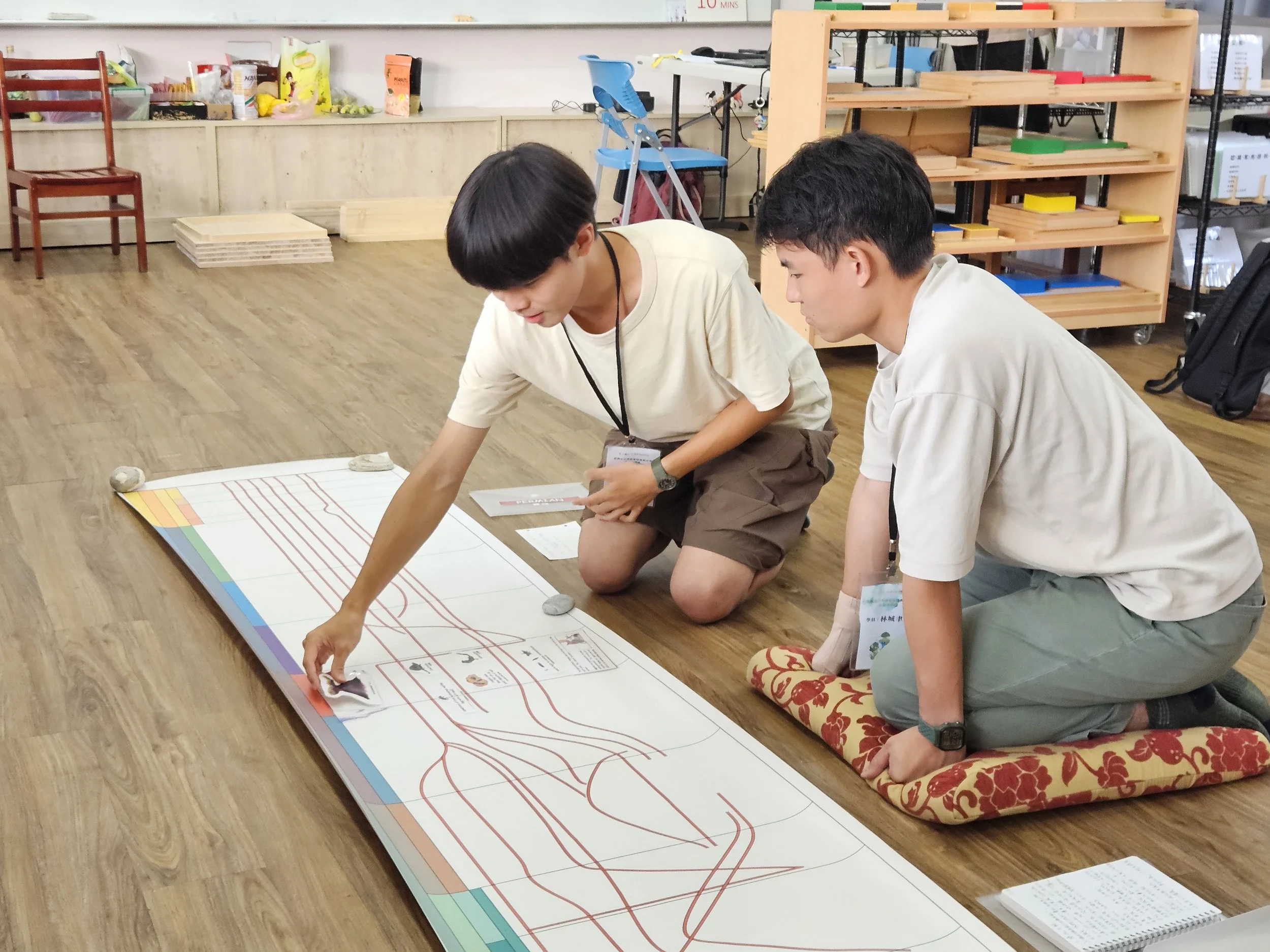
The second cohort of the Montessori Elementary School Tuition-Free Teacher Training Program attracted future teachers still in university, helping them build Montessori knowledge they can apply directly upon entering public schools.
Highlighting Human Value in the AI Era
Despite the many challenges, the flame of Montessori entering public schools has not been extinguished. As Taiwan develops its own local Montessori teachers, each practicing Montessori school serves as a major morale booster for other public elementary schools. Having accompanied Zhongyi Elementary in Taipei and Zhong-Keng Elementary in Taichung through their successful transformations into Montessori experimental schools, Professor Cheng remarked happily: "People used to think it was impossible for public schools to implement this philosophy. Now, they are not only doing it, but they have certified teachers leading the way." He described this change as having reached an "irreversible" state.
Schools that were on the brink of closure due to a declining birthrate have been turned around by Montessori. Professor Cheng described it vividly: "Parents talk to each other. This educational philosophy truly catches their eye. Regardless of their initial mindset, parents care about the faculty and attend training lectures themselves. Stable Montessori classrooms also make it easy for children to integrate. Now, both schools are almost at full capacity, even requiring a waiting list!"
Why is it said that "once you step into Montessori, you keep going"? Professor Cheng believes this rooting power comes from high parental recognition and support, as well as local governments marking it as an educational highlight. The most critical factor for stability is having a sufficient number of fully trained Montessori teachers on campus. Even if the principal changes, it is not easy to revert to traditional methods. "When teachers see true growth in children within this system and see their own professionalism in demand, they don't want to go back," he analyzed. For example, a middle school teacher who returned to a traditional school after training could no longer tolerate an environment focused only on grades and worked hard to create change from within.
In the AI era, many teachers in traditional systems worry about being replaced. Professor Cheng believes Montessori is not just a teaching method but an opportunity to rebuild professional confidence. He noted: "This model, which emphasizes observation, recording, and real-time guidance, relies heavily on the judgment of the teacher and the establishment of teacher-student relationships. This is precisely the irreplaceable expertise of a Montessori teacher in the digital era."
Further Reading: Montessori - Opportunity to shape education of the future
Connecting Global Perspectives: From Local Experience to Lifelong Care
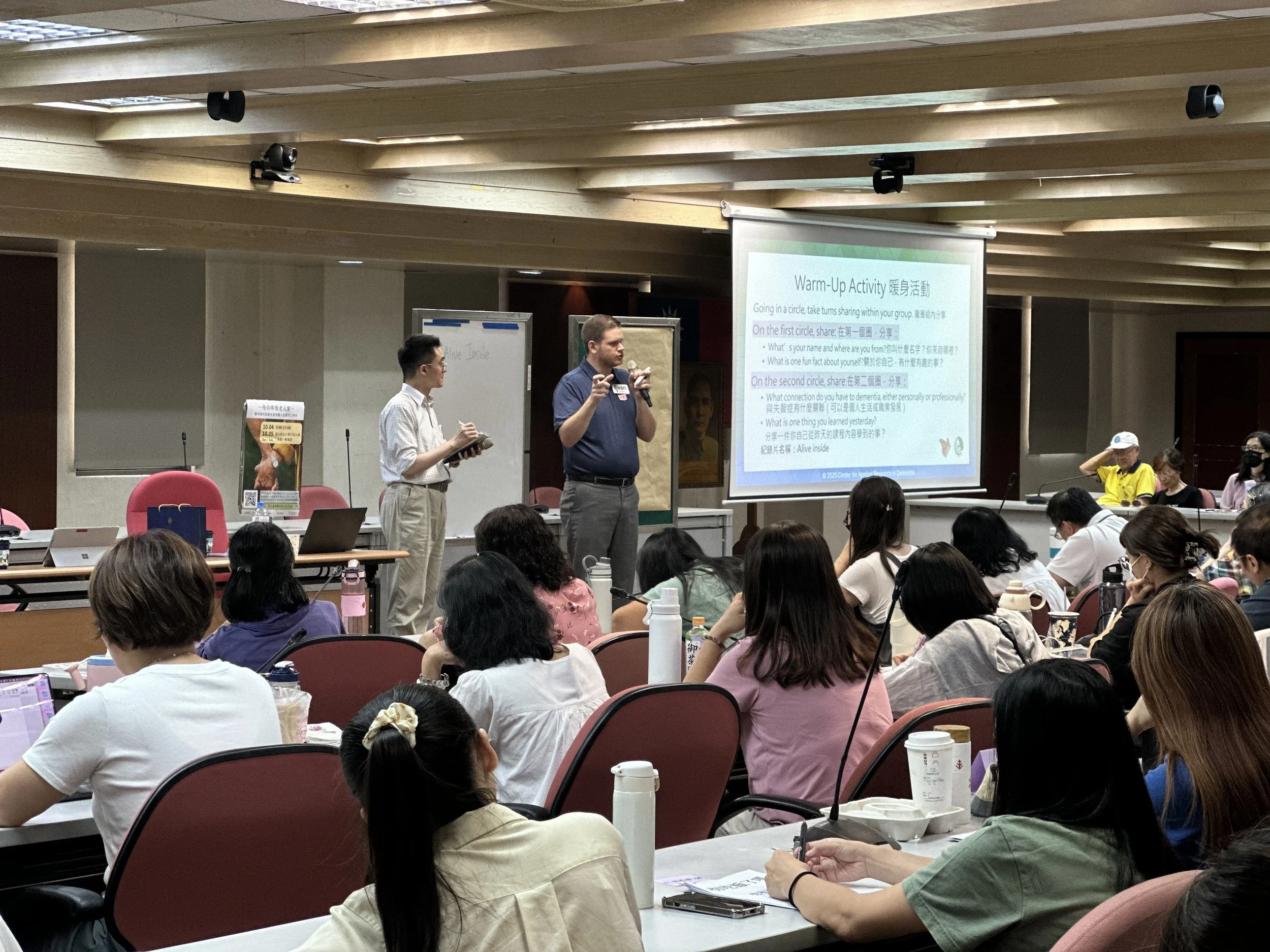
TMEC invited Dr. Evan Shelton, Director of Innovation at the Center for Applied Research in Dementia (CARD) in the U.S., to conduct a workshop in Taiwan.
In 2025, Professor Cheng shared Taiwan’s Montessori journey in Australia, specifically mentioning how Taiwan developed a teacher training suited for public school teachers. This localization of Western philosophy earned praise from international educators. Professor Cheng looks forward to providing Taiwan’s families with more affordable Montessori education options by cultivating more frontline teachers with Montessori mindsets.
Simultaneously, Professor Cheng observed that the international community has begun applying Montessori philosophy to elderly care. In recent years, TMEC has invited Montessori dementia care experts from the U.S. and Australia to hold lectures and workshops in Taiwan. He analyzed: "The Montessori philosophy is a way of treating people. No matter how fast the times change, human nature remains the same. Montessori focuses on allowing the elderly to use the abilities they still possess, giving them dignity and a sense of presence." This shift in perspective not only improves the quality of life for seniors but also ensures that both caregivers and the cared-for receive equal emotional and physical consideration.
From the transformation of public elementary schools to the protection of dignity in elderly care, TMEC has become a platform that converges domestic and international resources to lead changes in the quality of life. Professor Tung-Liao Cheng emphasized that regardless of how eras change, the autonomous spirit of human-centeredness remains the most precious core value when facing an unknown future. By extending care from the classroom to all stages of life, this path of practice—aligned with international standards yet rooted in Taiwan—is realizing the original intention of inclusive education, allowing people at different stages of life to become a force for change in themselves and the world through the transformation of education. ◪
Further Reading: Montessori Education Shines a Spotlight on Dementia Patient
Text by Yu-Hsiu Su
Photography by TMEC
This article is featured in the Y2 2025 Annual Report.