
Interview with Andy Chen, Founder of Y2 Foundation for Future Education
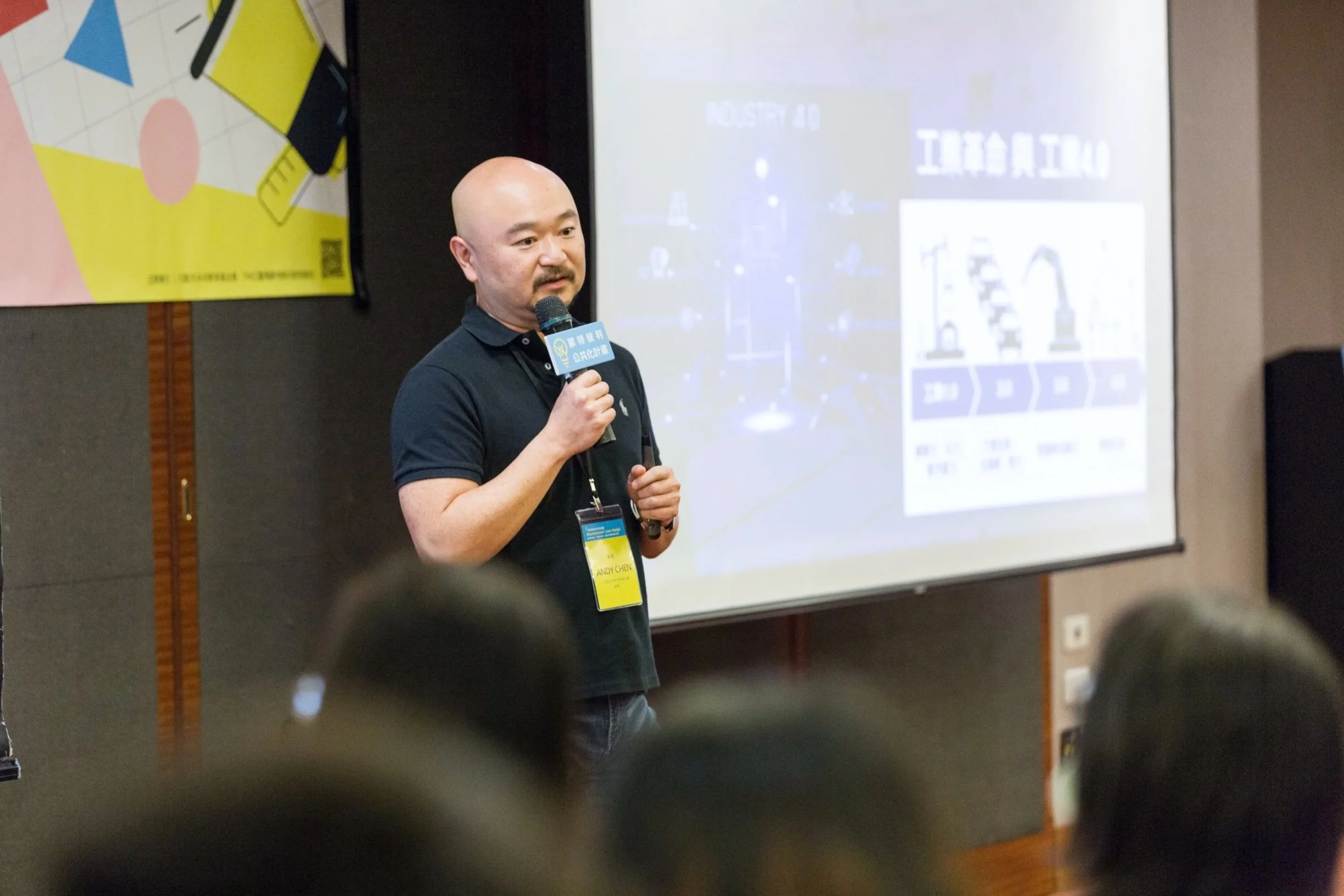
During the 2020 “Montessori Education in Public Schools” workshop, Andy shared his tech-industry insights with public school teachers, discussing future trends and how to support the transformation of public schools.
Since Dr. Maria Montessori, one of Italy’s first female physicians, established the Montessori education pedagogy in early 20th century, it has attracted countless explorers of education to discover its essence. Andy Chen, founder of the Y2 Foundation for Future Education, was initially drawn to it when his first child reached the age for schooling. During a visit to a Montessori preschool, he was captivated by the intense focus in the young children's eyes.
Andy recalls: "That year, on Labor Day, fathers or grandfathers were invited to observe and participate in the class. It was the first time I stepped into a Montessori classroom, and we saw a scene that remains deeply etched in our minds: Children were doing their own 'work'—contented and satisfied, yet extremely focused. It was a very special state of calm happiness yet being completely absorbed, as if they had entered flow."
Taking Action Within One's Means to Practice Corporate Social Responsibility
This profound inner resonance prompted Andy and his wife Cynthia to seriously discuss: "What exactly is Montessori?" During their explorations for their child's educational planning, they were touched by people in every corner of Taiwan selflessly dedicating themselves to education. Later, when their child entered a Montessori experimental primary school, the expensive tuition made Andy realize that not every family had such an option. This sparked the idea of establishing an education foundation to promote more inclusive and affordable educational choices.
"We simply saw a need and decided to act within our means. Many companies have excellent Corporate Social Responsibility (CSR) projects in various forms, and these predecessors, entrepreneurs, and people contributing in different fields have deeply inspired us. I believe that since we benefit from society, we should also give something back," Andy shares sincerely.
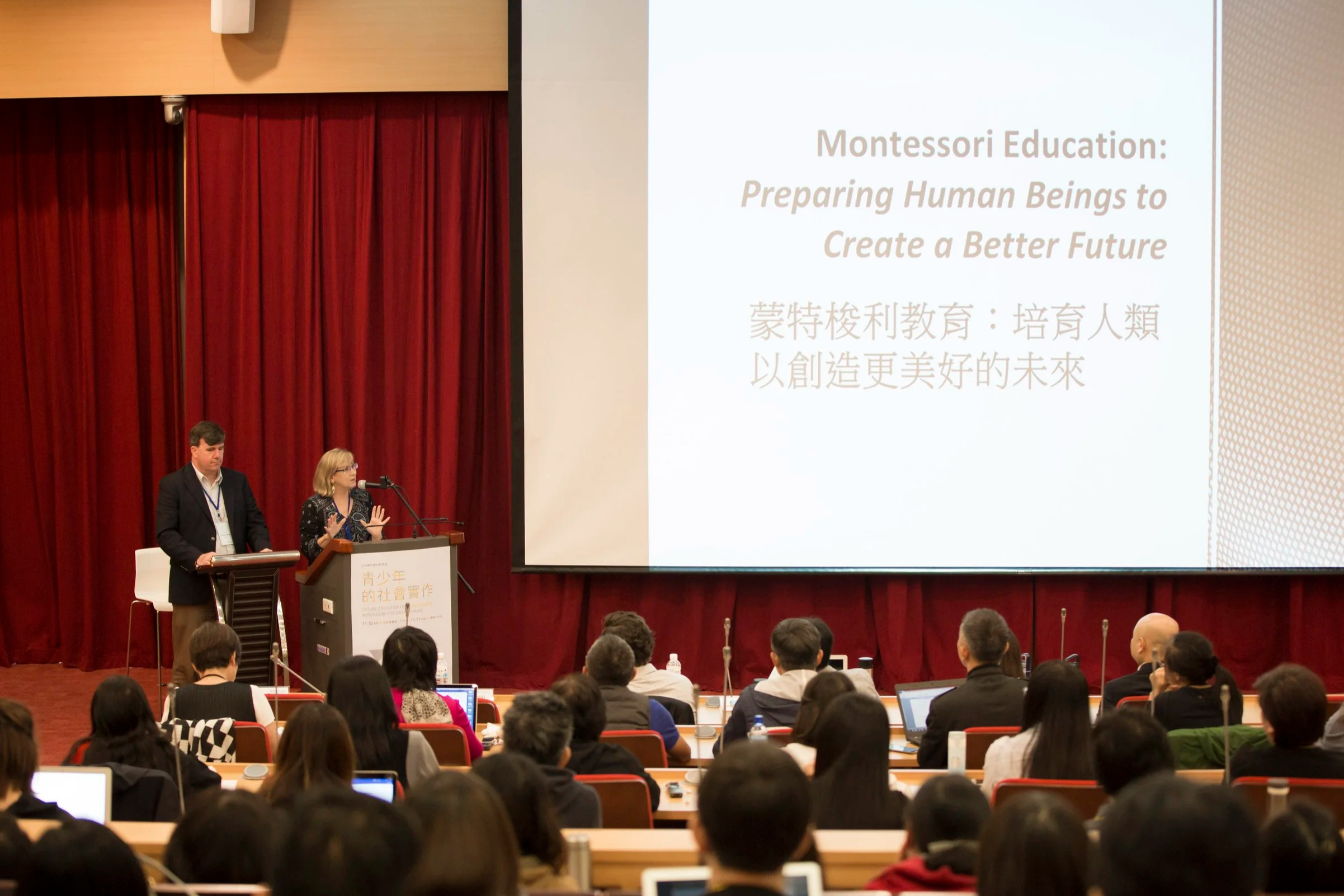
In 2018, Y2 hosted "Future Education For Adolescents-Montessori for Social Change," Taiwan's first forum focused on adolescent education. The event invited world-class educators to Taiwan, laying the foundation for introducing the Montessori secondary education system.
The More I Know, the More Uncertain I Become
The purpose of establishing the foundation is not to argue about right or wrong, but to preserve space for more diverse choices. He states: "Montessori is not the only option; children in traditional education can still have the ‘spark’ in their eyes. The key is how to provide an education that is tailored to each child's needs."
Looking back over the past few years, Andy often feels that the work has "just begun." "Because we are still practicing, exploring, and transforming, with the more I know, the more uncertain I become. This might sound contradictory, but it is precisely this state of facing the unknown that has broadened my perspectives. Some say it takes twenty years of practicing Tai Chi to even begin to understand it. Understanding the path of Montessori is like a spiritual practice. Perhaps ten years from now, I will still feel like I am just beginning."
The Harmony Between Montessori Philosophy and Eastern Classics
During the pandemic, Andy began exploring philosophy and mind-body practices such as Indian philosophy, Laozi and Zhuangzi’s teachings, Tai Chi, and yoga. For him, engaging in Montessori education is not about accumulating knowledge, but rather a path of practice that requires long-term, repetitive effort. He often reminds himself internally: The focus is not on "what I want," but on letting professional teachers lead the team to explore and implement. School administrators and teachers will confront and need to overcome various challenges as they utilize the people and elements of the land across different time and space to inspire students, and Andy’s role is to support and trust them.
He mentions the book The Weak Guidance Method of the Orange Devils (オレンジの悪魔は教えずに育てる) by Hiroyuki Tanaka, which points out that coaches should step back and let students lead, creating space for them to act autonomously. This echoes the concept of "Wu Wei" (non-action) in Laozi’s Tao Te Ching. Non-action is not “not doing”, but achieving through non-interference. This spirit aligns perfectly with the Montessori philosophy.
Andy further shares: "Weakness is the utility of the Tao. When we weaken our subjective consciousness, the space for dialogue increases. When there is a 'weak side,' cooperation between people occurs. Tai Chi emphasizes 'void and solid' (Xu and Shi); in fact, Tai Chi practices the 'void,' which shares the same philosophy as life and education."
Andy expresses his heartfelt gratitude to the principals, teachers, and administrative staff who have passionately participated in the foundation's promotion of Montessori philosophy. "The life stories of these teachers and partners are profound and pure. The return on investment in education lies in the fact that the process of doing this makes us happy. Children gain more confidence to face the unknown, and teachers gain a sense of achievement and motivation—that is the greatest reward."
Let the Process Itself Be the Reward:
Maintaining an Open "Flow" in the AI Era
Although he has embraced Eastern thinking in recent years, Andy is a true "tech person" at heart. As the Vice Chairman of Tyson Bioresearch Inc., he is optimistic about the impact of the AI era. He suggests that parents and educators treat AI as a tool and maintain curiosity toward the unknown without setting limits.
As Zhuangzi mentioned in The Adjustment of Controversies (Qi Wu Lun), "I have lost myself" (Wu Sang Wo), which means letting go of one's ego and attachments to remain open which can lead to infinite possibilities. When Andy lectured at Cornell University’s SC Johnson College of Business and College of Human Ecology, he shared this with the students:
"The process is more important than the result. If you ignore the process and only pursue the result, you will suffer. If you can enjoy the process, any result can be its own reward because you haven't set limits. In entrepreneurship, the chance of success becomes higher. The process of learning is more important than getting high grades; even if you get an A, it doesn't guarantee a smooth life forever."
These words carry a sense of Zen. When Andy studied Indian philosophy, he once asked, "What is spiritual practice?" His teacher told him, "You must let go of the goal of enlightenment. Attachment to this goal will prevent you from reaching it." His Tai Chi master also shared: "Tai Chi aims for a state of freedom and ease, but if you constantly pursue this, it will never happen."
Andy holds the same philosophy for Y2: "The foundation is the result of everyone's hard work. After sowing the seeds, we let nature take its course. How will the seeds grow? What will they look like? Precisely because there are no preconceived notions of what they should become, the results may far exceed my expectations."
The world is changing faster than ever. Whether in education, entrepreneurship, or AI, there will be different challenges. As long as we keep an open mind and allow for serendipitous encounters in life, the process of budding and blooming without limitations will be the most profound learning and inspiration that education brings us. ◪
Text by Yu-Hsiu Su
This article is featured in the Y2 2025 Annual Report.